
From Bubbles to Lasers
The Spirit Level
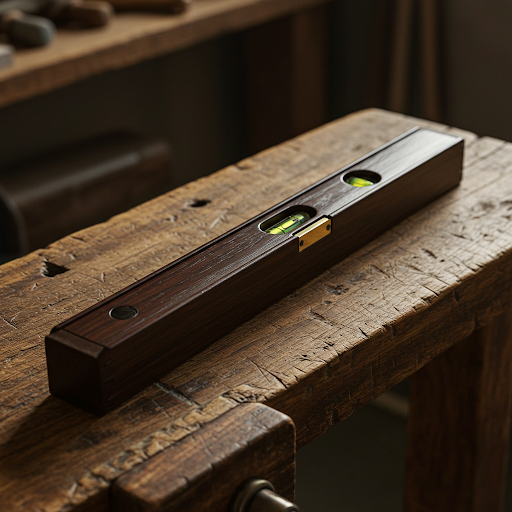
The image to the left shows a spirit level, often referred to as simply “a level” or “bubble level”. This tool is used all over the world from construction companies to an average American home. Spirit levels have been used for hundreds of years in a variety of applications. In the construction industry these levels are used to ensure an object is plumb and level. Being plumb refers to something being “level” but in the vertical direction. You can hold the level vertically against a wall to see if it’s leaning forward or backward. Being level means that the object is flat in comparison to whatever the object is being referenced against. For example a level can tell you if your floor is perfectly level and flat or slightly tilted (pitched), which means that if you place a ball on it the ball would roll on its own.
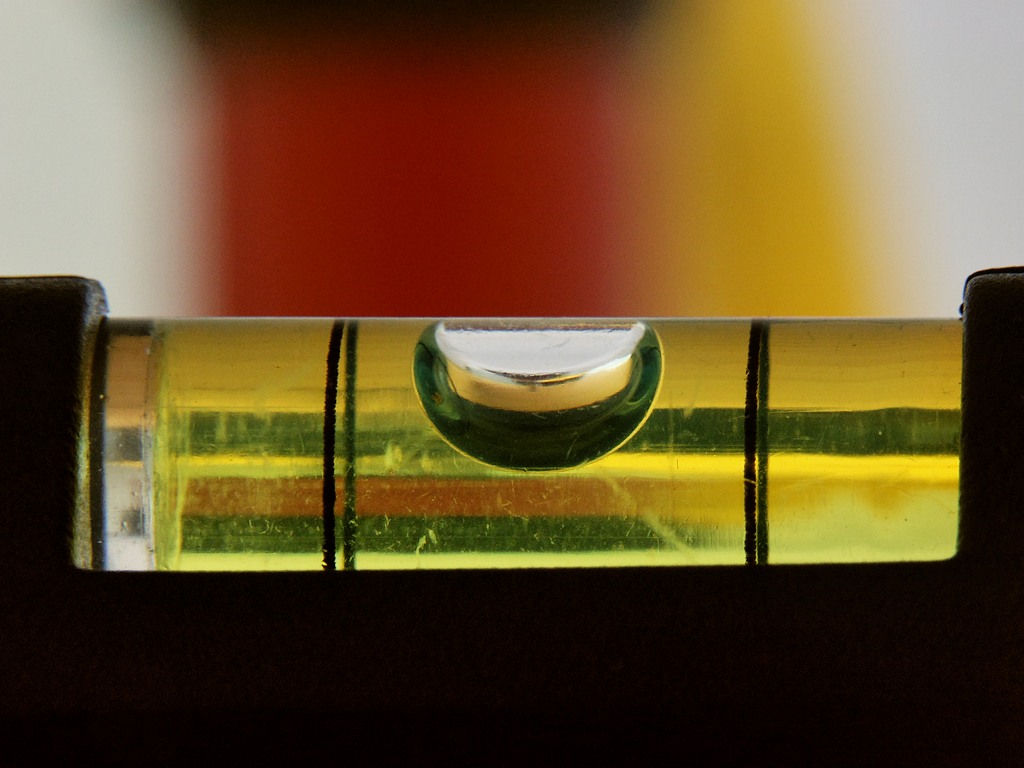
This tool simply utilizes gravity, liquid, and a little bit of air. In the image you can see two green ovals. These ovals contain a green fluid with a relatively small air bubble encased in a heavy duty glass. On this glass are two black lines spaced evenly along the oval. When the bubble falls between the two lines you have a level or plumb object. Some levels have smaller markings to indicate exactly how plumb you are.
In the construction industry levels are used for almost every phase of a project. They’re used from the moment you pour concrete to ensure your foundation is flat and they’re used after you’ve installed new appliances to ensure they don’t tip or allow object to roll off of them. The only problem is that these tools can get worn out without you knowing it. Due to the overall usage and abuse these levels go through they are prone to leaking fluid, which makes a larger and more inaccurate bubble. Not to mention they are generally made of cheaper metal materials that are prone to chipping and deformation which can make the tool more inaccurate. These issues paved the way for new technology to take over, the laser level.
The Leveling Revolution
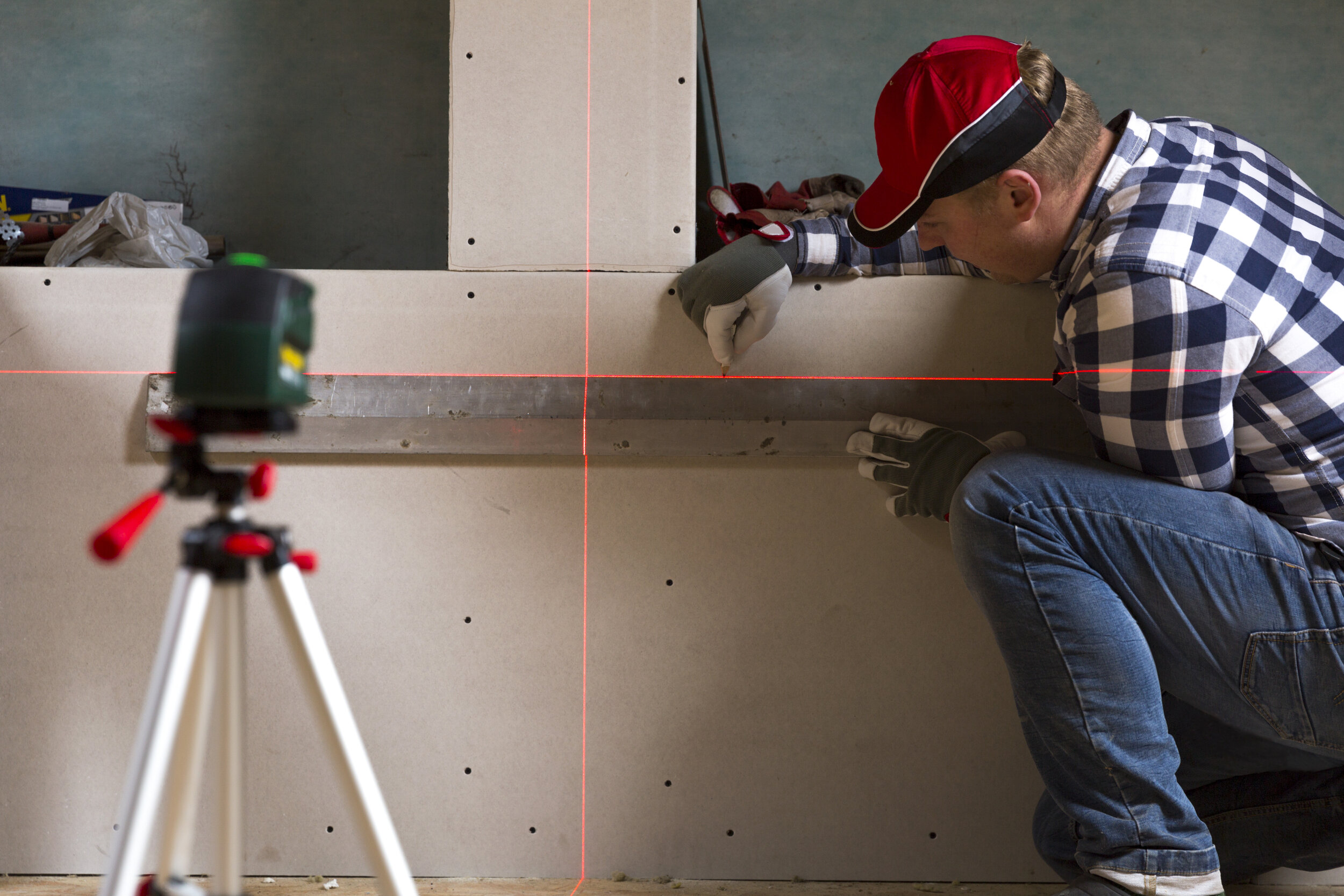
Laser levels perform the exact same functionality as a spirit level. They can be used to level multiple objects both vertically and horizontally without lifting a finger. Laser levels are set on a tripod and two lasers are projected, one horizontal and the other vertical, along a large space. All the user needs to do is calibrate the laser to project the exact level or plumb they desire and they’re off to the races.
This type of laser is great for increasing efficiency. In construction time is money and every time someone needs to pick up and set down their level is lost time. If a subcontractor is installing multiple televisions, whiteboards, coat hangers, or anything for that matter they can set up the laser once and know that what they are installing will be perfectly level (outside of user error which can be problem with spirit levels as well).
On top of being efficient this laser lacks the issues that come with a spirit level. The lasers come with their own case, they’re not being touched which prevents damage, and they don’t require fluid to operate. Of course this isn’t to say that lasers don’t have their own issues.
Lasers are more expensive up front, which is reasonable. If you have to buy 2 spirit levels every year for $200 each, wouldn’t it be more practical in the long run to buy the $1000 level once? Of course it makes more sense to have that one time purchase compared to repeat costs that will total up over the one time purchase over time. The laser levels also have a slightly larger learning curve with calibration. Again, in the long term after you get beyond the initial learning curve the efficiency increase far outweighs the cons. Standard lasers can cover up to 100 feet easily well levels not only limit distance to a couple feet max, they also require being held by another person.
Laser levels perform the exact same functionality as a spirit level. They can be used to level multiple objects both vertically and horizontally without lifting a finger. Laser levels are set on a tripod and two lasers are projected, one horizontal and the other vertical, along a large space. All the user needs to do is calibrate the laser to project the exact level or plumb they desire and they’re off to the races.
This type of laser is great for increasing efficiency. In construction time is money and every time someone needs to pick up and set down their level is lost time. If a subcontractor is installing multiple televisions, whiteboards, coat hangers, or anything for that matter they can set up the laser once and know that what they are installing will be perfectly level (outside of user error which can be problem with spirit levels as well).
On top of being efficient this laser lacks the issues that come with a spirit level. The lasers come with their own case, they’re not being touched which prevents damage, and they don’t require fluid to operate. Of course this isn’t to say that lasers don’t have their own issues.
Lasers are more expensive up front, which is reasonable. If you have to buy 2 spirit levels every year for $200 each, wouldn’t it be more practical in the long run to buy the $1000 level once? Of course it makes more sense to have that one time purchase compared to repeat costs that will total up over the one time purchase over time. The laser levels also have a slightly larger learning curve with calibration. Again, in the long term after you get beyond the initial learning curve the efficiency increase far outweighs the cons. Standard lasers can cover up to 100 feet easily well levels not only limit distance to a couple feet max, they also require being held by another person.
It is clear that the digitization of leveling has dramatically benefited the construction industry. The efficiency, long term cost saving, and durability drive the laser level lightyears above the classic spirit level. Of course that doesn’t come without some minor drawbacks, but the benefits of a laser level far outweigh the cons. I will and have always preached that anyone working in the construction industry should have a laser level in their toolbox, it’s an absolute no brainer!